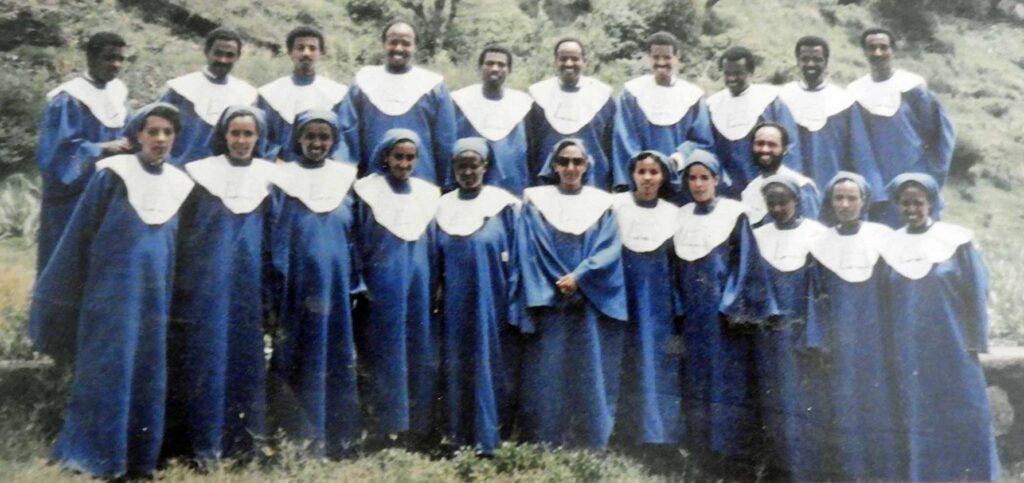
In 1973, the three friends known as ‘the trio’—Solomon Beyene, Teshome Haile, and Girma Abebe—and their families became the seed that grew to become the Kale Heywet Church (KHC) in Debre Zeit, a major town located approximately 30 miles southeast of Addis Ababa. The following year, the Ethiopian Revolution broke out. In 1975, the communist youth in the city destroyed the house in which the believers met to worship.
When the Kale Heywet members realized they could no longer openly worship, they joined the local Evangelical Church Mekane Yesus (ECMY) as associate members. In 1976, the serving priest of the congregation, Rev. Regassa Bedada, opened the door for them to serve in all capacities. In 1981, the Debre Zeit ECMY was also closed down by the atheist government. All Christians went underground and met in home churches.
In the mid-1980s, as communism began to crumble internationally, religious persecution in Ethiopia slowed down, and underground churches started to minister openly. The crucial factor for the Debre Zeit KHC to come to the open was the development program that the Ethiopian Kale Heywet Church Home Office started at the edge of the city.
It was a little before this juncture in August 1987 that Zelalem Mengistu and Tiru Kebede founded the Debre Zeit KHC choir. Zelalem had just joined the local church as a full-time evangelist. He and Tiru knew each other from their time in Asmara when Zelalem studied at the local university and Tiru’s husband, Teshome, served in the Ethiopian Air Force. Tiru had been a member of the Debre Zeit EECMY choir before she moved to Asmara.
Soon, a few more joined the choir, e.g., Nigussu Degefa, Debebe Eshetu, and Tesfaye Tiroro. Tesfaye and Zelalem were the composers of the earlier songs. Besides, Zelalem played the keyboard during services, and Tiru was like a mother to the choir. In 1989, a few seasoned singers joined the choir. A year later, one of the leading composers in the legendary Debre Zeit ECMY choir also united with the group, Wondiye Ali. It was Wondiye who wrote most of the songs the Debre Zeit KHC choir sang after 1990. He also edited songs composed by others.
The new members gave the Kale Heywet Choir a grand leap. These experienced singers inculcated their accumulated knowledge into the group. Every Friday, the choir members spent the whole night in prayer. Usually, they met again on Saturday afternoons and Sunday early mornings for prayer and practice sessions. Only after much prayer did they take the stage to worship. Saturating their ministry with prayers was the influence of the more experienced members of the choir
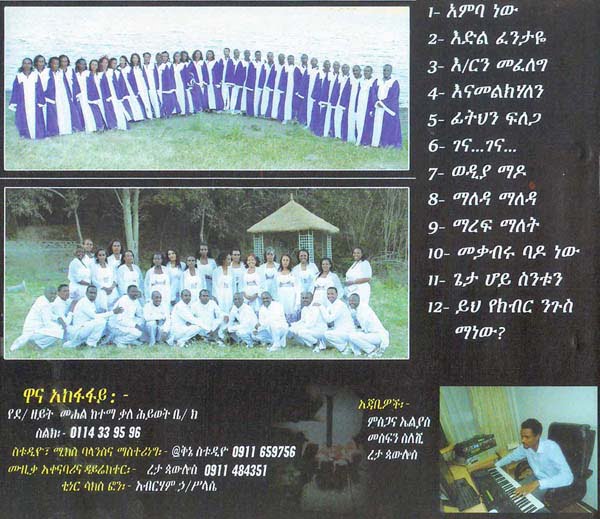
After 1990, the choir was blessed with more than 200 new songs. Some of the lyrics were composed during the Friday night vigils. Then melodies were added, and the choir rehearsed the new songs until the wee hours of the morning. The songs varied in topic and were occasionally prophetic. In the years 1990-1992, when the condition in Ethiopia was very precarious, the choir intoned reassuring songs. When the society was at the brink of breakdown, the choir professed, Amba naw (‘He is the Rock!’). When the Christians needed His uplifting, the choir sang out, Merkebay (‘Our Ship’).
The choir gained widespread recognition in Debre Zeit and beyond. Invitations flowed in, and doors opened. Wherever the choir went to serve, blessings poured. At the end of the services, the group often sang, ‘I am an unworthy servant’ so that the singers’ hearts might not be puffed up. Other songs they presented were ‘We will worship You,’ ‘Seeking the Lord,’ ‘Come, Oh Come, Come Quickly,’ ‘To Our Foundation,’ ‘My Portion,’ ‘This King of Glory,’ and ‘I Surrender.’
Albums
(1) _ _ _ [_ _ _, _ _ _] (Title of the cassette in Ethiosemitic script plus English translation?) Cassette with Amharic songs, released by …, Addis Ababa (?), 1993.
image?
(2) _ _ _ [_ _ _, _ _ _] (Title of the cassette in Ethiosemitic script plus English translation?) Cassette with Amharic songs, released by …, Addis Ababa (?), 1997
image?
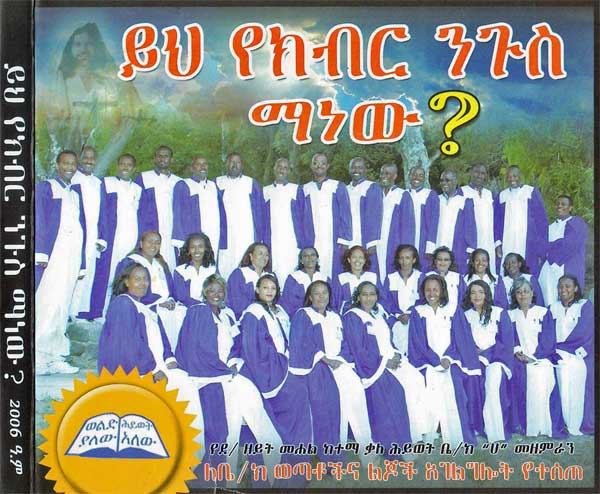
(3) Yəh yäkəbər Nəgus manəw? [ይህ የክብር ንጉስ ማንው? Who is this King of Glory?]. CD (or VCD?) with Amharic songs, recorded in Addis Ababa, 2006.
Songs in hymnbooks
If applicable, please give the page/ hymn numbers
in Wudasé Amlak, etc.
Audio
albums/ collections
?
songs with lyrics
ዝም ብዬ (video publ. in 2016):
እግዚአብሔርን መፈለግ (2017):
አምባ ነው (2019):
Video
recorded in 2017:
Pictures